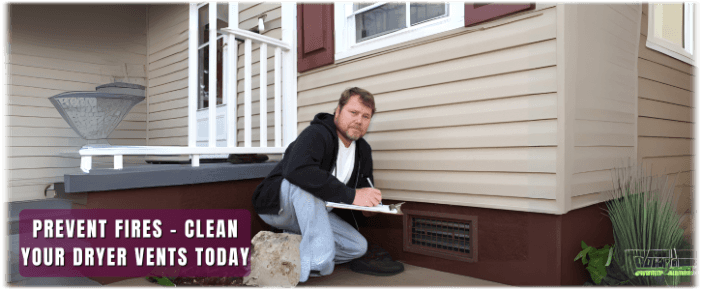
Dryer Vent Cleaning


Most people clean their dryer lint trap and figure they they have cleaned their dryer vents. What they don’t realize is that not all clothes lint is caught by the lint trap. Lint that gets past the lint trap can accumulate in the dryer hose and ductwork.

Dryer vent cleaning can often be performed by the homeowner but  the location of the duct work, length of the dryer hose and other factors often mean a professional dryer vent cleaner is needed. If a dryer is located near an outside wall, the duct work may be short enough that the homeowner can access all of it and clean it adequately with a vacuum or brush. In other situations a professional is needed.

Anyone who has used a clothes dryer knows that a significant amount of lint is generated and that the lint trap needs to be cleaned (the volume of this stuff always amazes me). Depending on the fabric being dried, the lint trap generally needs to be cleaned after every load of clothes. Cleaning the lint trap improves air flow and lets it operate more efficiently.

The lint trap does not catch all the lint. Some lint may make it all the way through the dryer air vent and be released outside of your home but some of the lint can get stuck in the duct work.  Flexible dryer hose that has ridges and corners and bends in duct work are especially vulnerable to accumulate of link. The longer the duct work the greater chance that lint will not make it all the way to the outside of your house as the air from the dryer that pushes it along weakens the further it travels.

Bucket of dryer lintA surprising number of home fires are caused by dryer vents that become obstructed by lint. U.S. Consumer Product Safety Commission (CPSC) studies have shown that in excess of 15,000 home fires are associated with clothes dryers and excess lint build up is suspected in many of these fires.

Lint is highly flammable and if a dryer vent becomes restricted and cannot properly vent the hot air, it can cause heat to build up which can ignite the lint. These fires are easily preventable with a little preventative dryer vent cleaning.

To help prevent fires, the CPSC recommends the following:

  • Clean the lint trap between each load of clothes.
  • Clean the dryer vent and all dryer duct work periodically (this generally requires disconnecting the dryer from the dryer hose).
  • Check the outside dryer vent while the dryer is operating to make sure exhaust air is escaping. If it is not, the vent or the exhaust duct may be blocked. Clean behind the dryer, where lint can build up. Have a qualified service person clean the interior of the dryer chassis periodically to minimize the amount of lint accumulation. Keep the area around the dryer clean and free of clutter.
  • Replace accordion type duct material with rigid or corrugated semi-rigid metal duct. Most manufacturers recommend rigid or corrugated semi-rigid metal ducting because they provide better airflow. Flexible plastic or foil ducts trap more lint and can be susceptible to kinks or crushing, which reduces airflow.
  • Take special care when drying fabric that has been soiled with flammable chemicals such as gasoline, cooking oils, cleaning agents or wood finishing oils and stains. Consider washing clothes that have been exposed to such chemicals more than once to minimize the amount of the chemicals remaining on or in the fabric and, ideally, hang dry these items. Use the lowest heat setting and a drying cycle with a cool-down period at the end of the cycle. Additionally, do not leave the dried items in the dryer or piled in a laundry basket.